

Therapy Services for Partners
Demand far outpaces provider supply. Families wait months, children lose ground, and some leave your program entirely.
Therapy Services
Demand far outpaces provider supply. Families wait months, children lose ground, and some leave your program entirely.
The Waitlist Dilemma.
Early intervention is linked to IQ gains of 9 to 15 points, but only if children can actually start. Demand for autism and developmental services far outpaces the supply of qualified providers. Families wait months. During that wait, children lose developmental ground and families grow frustrated, sometimes leaving your care entirely.
73% of Children Waited for Therapy Services
(Wait times ranged from 1 month to over 1 year).
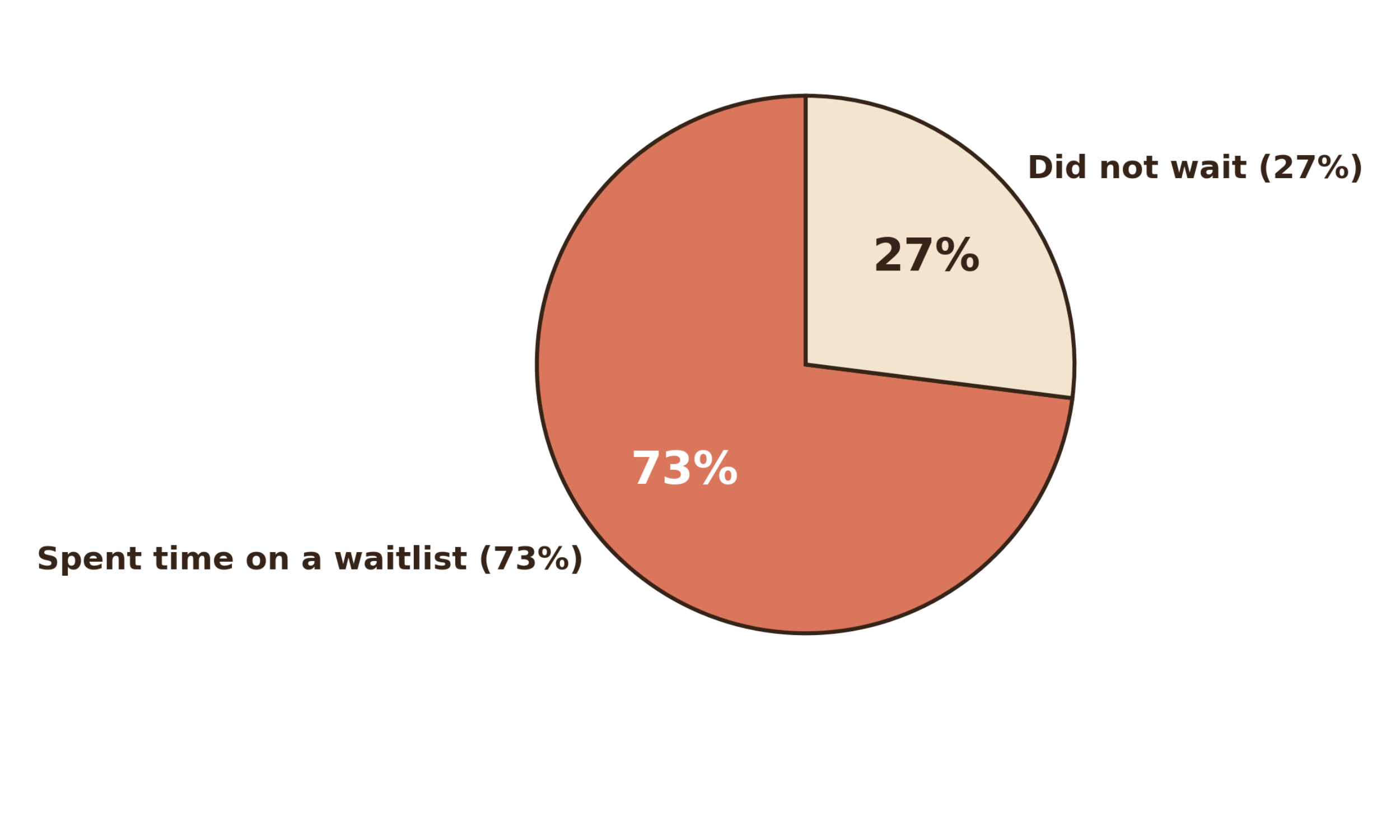
What this shows: Most children spent time on a waitlist before receiving services.
Source: Stephens et al. Behavior Analysis in Practice (2025), https://link.springer.com/article/10.1007/s40617-023-00896-9
Early Intervention is Linked to IQ Gains of 9 to 15 Points in Young Children

What this shows: Studies of early intensive intervention report IQ gains of 9 to 15 points versus no early intervention.
Source: Early Intensive Behavioral & Developmental Interventions Review, PMC https://pmc.ncbi.nlm.nih.gov/articles/PMC12599662/
The Waitlist Dilemma.
Early intervention is linked to IQ gains of 9 to 15 points, but only if children can actually start. Demand for autism and developmental services far outpaces the supply of qualified providers. Families wait months. During that wait, children lose developmental ground and families grow frustrated, sometimes leaving your care entirely.
73% of Children Waited for Therapy Services
(Wait times ranged from 1 month to over 1 year).
What this shows: Most children spent time on a waitlist before receiving services.
Source: Stephens et al. Behavior Analysis in Practice (2025), https://link.springer.com/article/10.1007/s40617-023-00896-9
Early Intervention is Linked to IQ Gains of 9 to 15 Points in Young Children
What this shows: Studies of early intensive intervention report IQ gains of 9 to 15 points versus no early intervention.
Source: Early Intensive Behavioral & Developmental Interventions Review, PMC https://pmc.ncbi.nlm.nih.gov/articles/PMC12599662/
Turn Wait Time Into Progress Time
Every family you serve who needs therapy is a child who cannot afford to wait. Growing Healthy Seasons partners with organizations to give those families immediate access to licensed developmental therapy, so children keep progressing while your services continue.
Add immediate therapy capacity that keeps families engaged and children progressing, extends your reach, and strengthens your care network, without new locations or hires.

Turn Wait Time Into Progress Time
Every family you serve who needs therapy is a child who cannot afford to wait. Growing Healthy Seasons partners with organizations to give those families immediate access to licensed developmental therapy, so children keep progressing while your services continue.
Add immediate therapy capacity that keeps families engaged and children progressing, extends your reach, and strengthens your care network, without new locations or hires.
The right care, right away.
Getting children the right care, right away. That belief drives everything we do, and it is likely what drives your organization too. We complement the services you already provide by furthering your service reach.
Early intervention matters
Early therapy can raise a child's IQ by 9 to 15 points. That's enough to move a child from well below average to right at standard peer level, giving them a real shot at keeping up in school and everyday life.IQ gains of 9 to 15 points.
Early childhood is when the brain is most able to change, making it the window where therapy has the greatest impact. Children who start early are linked to IQ gains of 9 to 15 points, enough to shift a child from well below average to peer level. Every month a family waits narrows that window.
Family-Centered and Flexible
Therapy should fit into your family's life, not take it over. We deliver care online, in our clinics, or in schools, scheduled around the routines, work, and school days you are already managing.Care that works around you.
Every family runs on a different rhythm. Some need the convenience of online sessions at home, some do best in our clinics, and some need support built into the school day. We meet families where they are, so therapy becomes part of life instead of one more thing to juggle.
Care Anywhere, Care Anytime
Cost, distance, and provider shortages keep too many families from the therapy they need. We work to remove those barriers so care starts sooner.Barriers should not decide outcomes.
Over 80% of states report shortages of autism-related personnel, and families in rural or underserved areas feel it most. Online delivery erases distance, flexible scheduling erases conflicts, and immediate openings erase the wait. A family’s zip code should never determine whether their child gets care.
The right care, right away.
Getting children the right care, right away. That belief drives everything we do, and it is likely what drives your organization too. We complement the services you already provide by furthering your service reach.
Early intervention matters
Early therapy can raise a child's IQ by 9 to 15 points. That's enough to move a child from well below average to right at standard peer level, giving them a real shot at keeping up in school and everyday life.IQ gains of 9 to 15 points.
Early childhood is when the brain is most able to change, making it the window where therapy has the greatest impact. Children who start early are linked to IQ gains of 9 to 15 points, enough to shift a child from well below average to peer level. Every month a family waits narrows that window.
Family-Centered and Flexible
Therapy should fit into your family's life, not take it over. We deliver care online, in our clinics, or in schools, scheduled around the routines, work, and school days you are already managing.Care that works around you.
Every family runs on a different rhythm. Some need the convenience of online sessions at home, some do best in our clinics, and some need support built into the school day. We meet families where they are, so therapy becomes part of life instead of one more thing to juggle.
Care Anywhere, Care Anytime
Cost, distance, and provider shortages keep too many families from the therapy they need. We work to remove those barriers so care starts sooner.Barriers should not decide outcomes.
Over 80% of states report shortages of autism-related personnel, and families in rural or underserved areas feel it most. Online delivery erases distance, flexible scheduling erases conflicts, and immediate openings erase the wait. A family’s zip code should never determine whether their child gets care.

Sample Online Speech Therapy Session
Sample Online Occupational Therapy Session
Tips for a Successful First Online Session

Prepare the Child
Before the first session, we help families identify their child’s interests, strengths, triggers, and concerns. We coach parents on how to frame the experience for their child, positioning it as a chance to play with their therapist in a new way, together through the screen even though they are in different places.”

Here to Help
No family needs to be tech-savvy to succeed with us. Our therapists explain the basics, give clear directions, and troubleshoot minor issues in the moment. For anything beyond that, families and therapists can reach our technical support directly, so a connection problem never derails a session.

Working as a Team
Therapy does not work in a vacuum. We set the expectation that a parent or caregiver joins each session to assist with technology, gather materials, act as the therapist’s hands when needed, and observe the strategies being used. Therapists send material lists ahead of time and give clear direction throughout, so families always know what to expect.

A Collaborative Process
Online therapy works in large part because families are part of it. When parents attend and observe, they gain a deeper understanding of what their child’s therapy is doing and how they can support it every day. That involvement builds parent skill and confidence, generates better questions and ideas, and turns each session into progress that continues between visits.

Contact us today!
NOTICE: We are noticing some are having issues submitting forms and it seems to happen on Google Chrome browsers. We recommend you access this page on your Safari or other web browsers while we work on sleuthing the culprit. If you need further help, please contact us at care@growinghealthyseasons.com or call us at (530) 391-8670. Thank you!